
Why Are Millennials Saying No to Overwork?
In the extremely competitive job market, more and more young workers are withdrawing from the "996" work culture. "996" used to be synonymous with ambition and achievement. But now young people are beginning to put personal well-being above corporate expectations, and this lifestyle marks a major shift in the workplace. This "lying flat" and "playing bad" mentality reflects the widespread disillusionment among young people, is a passive resistance to social pressure by young people, and also reflects a young person's understanding that in a saturated job market, the return on overwork is diminishing. As many young people find themselves overworked, underpaid, and with limited upward mobility, this phenomenon has also received increasing attention.

- Compensation, basically compensation is the income that employees receive in exchange for work. Most people need this compensation to meet their basic needs. Many millennials hate their jobs, but without work, they cannot maintain their lifestyle. In addition, some millennials believe that their compensation does not match their experience and skills. They realize that their contributions to the organization are not fairly compensated.
- Promotion opportunities. Millennials care about career development, but the harsh reality is that there is no promotion ladder for them. Even though they do a good job, there is no chance of promotion here.
- Supervisors. People do not leave their jobs, but their supervisors. Gallup research shows that one in two employees leaves their jobs to get rid of their managers.
- Traditional work rules. Many companies adhere to outdated rules. Most millennials come to work with great enthusiasm, but the old management methods, forms, gaps and annual reviews squeeze the life out of them.

-
 Work & Life
Workations are the new corporate perk
In Europe, a 30-hour work week is generally adopted, which gives people more leisure time. According to the 2019 OECD working hours statistics, most Europeans work an average of about 30 hours a week, that is, 5 days a week and about 6 hours a day. Specifically, Germans have the shortest working hours, working only 26 hours a week, or 5.2 hours a day; while Danes and Norwegians work 27 hours a week and 5.4 hours a day. French and Luxembourgers work 29 hours a week and 5.8 hours a day. In Belgium, Switzerland, Austria and Finland, people work 30 to 31 hours a week. In contrast, British and Spanish people work 32 hours a week and 6.4 hours a day. In contrast, China's working hours are significantly longer, with an average of 46 hours a week, or 9.6 hours a day.
-
 Work & Life
Should you quit your job for mental health?
In the fast-paced modern life, depression is like an imperceptible cloud, quietly shrouding the hearts of many people in the workplace. It is not just a low mood, but also a comprehensive erosion of daily life, work and even interpersonal relationships. When you find yourself in such a predicament, a brave and necessary decision may open a new door of hope for you - that is, at the right time, choose to resign and give yourself a precious time to heal and reborn.Mental health is central to personal well-being, and when work has a significant negative impact on mental health, resignation may become a serious option to consider. However, this decision is not a simple yes-or-no question, but requires careful weighing of individual circumstances.
-
 Work & Life
Should offices ditch email entirely?
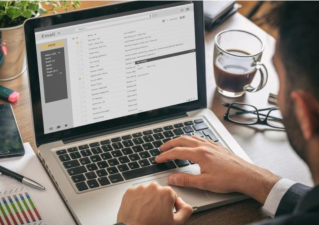
Why do you want to use email more at work? Because email is now mainly used for office communication in enterprises and institutions, the answer to this question still lies in corporate email. Email, its security, stability, scalability, and behavior controllability are all factors that cannot be replaced.Whether offices should completely abandon email requires a comprehensive assessment of its functionality, efficiency, and applicable scenarios. Email has unique advantages in terms of formality, archiving, and cross-platform communication, while instant messaging tools are more efficient in real-time collaboration, but a complete replacement may be unrealistic or the optimal solution.